Agency Playbooks
What an AI visibility retainer looks like vs a one-time audit
A one-time audit is a snapshot; an AI visibility retainer is a maintenance discipline, and the difference is structural, not just commercial. A snapshot tells a client where they stand across the four engines on the day it was run — useful, but stale within weeks, because AI engines re-sample the web continuously and citation behaviour shifts as competitors earn coverage and models update. A retainer treats AI visibility the way it actually behaves: as a position that has to be defended. The recurring engagement covers a fixed audit cadence, ongoing citation share-of-voice tracking, remediation as new gaps appear, and reporting that shows trend rather than a single reading. For agencies, the retainer is also the only model where the economics work — the diagnostic and outreach work is front-loaded, but the value compounds, and a snapshot under-prices the ongoing maintenance the client genuinely needs. Frame the one-time audit as the entry point that surfaces the gaps, and the retainer as the engagement that closes and holds them.
The core audit sequence every client needs
Every client audit should run the same sequence, in the same order, so findings are comparable across a roster. Start with entity resolution: sample relevant queries across ChatGPT, Perplexity, Claude, and Gemini and record whether the brand is cited, omitted, or misdescribed. Next, check entity consistency — name, category, location, and description across the website, schema, Google Business Profile, directories, and Wikidata — and flag contradictions. Then assess third-party corroboration: how many credible, independent sources describe the brand, and how recent they are. Finally, evaluate on-site extractability: do key pages lead with answers, and is FAQPage schema present and valid. The order matters because each layer is interpreted in the context of the one before it — clean schema on a brand with no corroboration is a brand making unverified claims about itself, which engines are calibrated to discount. The output is a prioritised remediation roadmap: fix the entity and trust layer first, earn corroboration second, and restructure on-site content last.
How to structure the client conversation around AI visibility
The client conversation fails when it leads with mechanics and succeeds when it leads with a concrete absence. Open by showing the client a real query their customer would ask an AI engine, and the answer that names a competitor instead of them — that single demonstration does more than any explanation of entity confidence. From there, frame the problem in terms the client already understands: this is not a ranking problem, it is a “does the AI know and trust you” problem, and it is invisible in every report they currently receive. Avoid jargon dumps; introduce GEO and AEO only as far as needed to explain why their existing SEO investment did not solve it. Set expectations honestly on timeline — on-site fixes can land in days, but off-site authority and entity changes influence citation over weeks to months, with no guaranteed date, because the engines update on their own schedules. Honesty about uncertainty builds more trust than a confident timeline you cannot defend.
Reporting AI search performance to non-technical stakeholders
Non-technical stakeholders do not want signal-level detail; they want to know whether they are winning and whether the investment is working. Report against one headline metric — citation share of voice across the four engines — and show it as a trend, not a single number, alongside the competitive set. Translate the underlying work into outcomes the stakeholder cares about: “the AI now names you in answers to these five buyer questions where it previously named a competitor.” Use proof receipts — the actual query and the actual answer citing the brand — as the evidence layer, because a screenshot of an AI naming the client is more persuasive than any dashboard. Keep the methodology available but not front-and-centre. The reporting trap to avoid is importing SEO habits: ranking tables and traffic charts retrain the stakeholder to judge the wrong thing. Anchor every report on citation presence and share of voice, and the conversation stays on the channel that actually moves AI-driven discovery.
Managing AI visibility across a multi-client roster
The operational challenge that separates GEO from traditional SEO at the agency level is that client audits do not share a common baseline — each client has a different entity footprint, different competitive set, and different gap distribution across entity, corroboration, and content structure. At small roster sizes that is manageable manually; at ten or more clients it compounds. The agencies that scale GEO successfully standardise at the workflow level first: a fixed audit template run in the same order across every client, a common set of queries sampled per client per engine, and a consistent reporting format so findings are comparable. The platform question — whether to use purpose-built GEO tooling or build on existing SEO infrastructure — comes after the workflow is standardised, not before. Agencies that buy tooling first and build the workflow around it tend to shape their service to the tool’s output rather than to client needs.
Agency Playbooks for AI Search Visibility
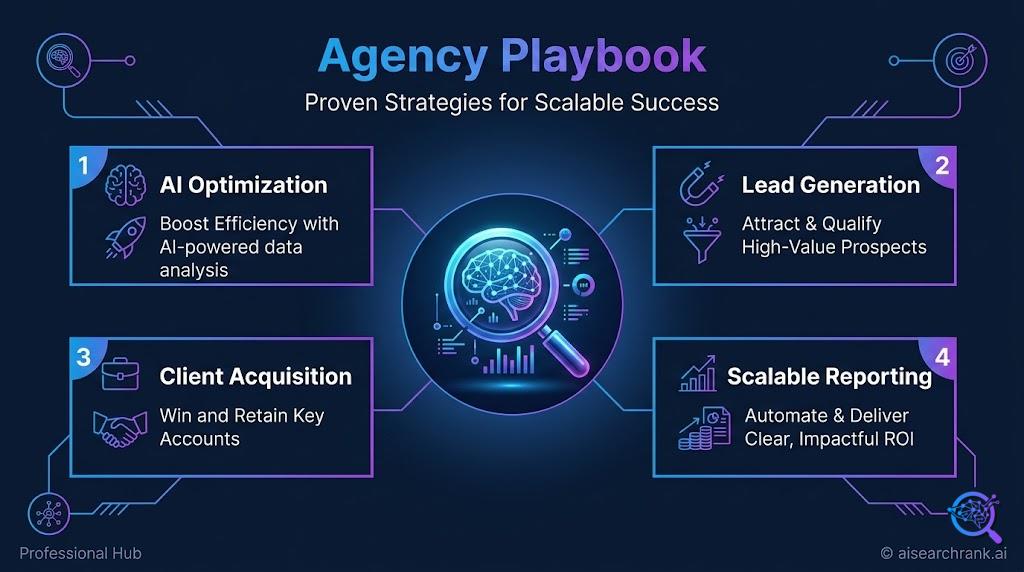
Agencies managing AI search visibility face a different operational challenge than traditional SEO: the diagnostic complexity scales faster than expected, each client has a different entity baseline, and the measurement tooling most teams rely on cannot see AI citation behaviour at all. These playbooks cover the audit methodology, client communication frameworks, and vertical-specific strategy that agencies need to deliver GEO services systematically — not as a one-off project, but as a retainer-level practice
How Agencies Should Sequence GEO and AEO Work Across a Client Roster
Agencies that treat GEO and AEO as a single undifferentiated workstream — or worse, run them simultaneously on every client without a clear order — waste months on the wrong fixes and struggle to show results before a client loses patience. The correct sequence is AEO…
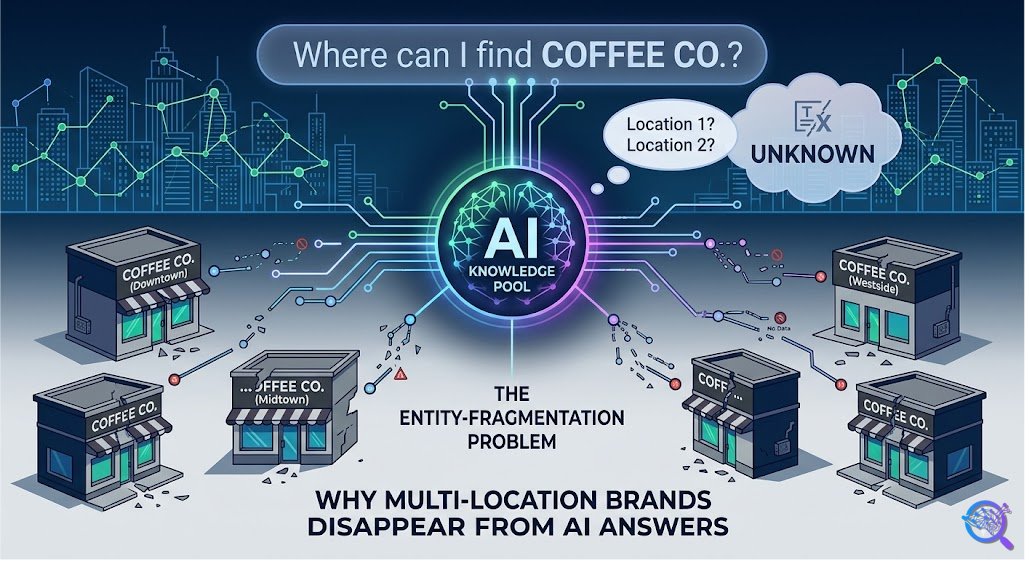
The Entity-Fragmentation Problem: Why Multi-Location Brands Disappear From AI Answers
Multi-location brands disappear from AI answers not because they lack content, but because fragmented entity signals — inconsistent names, addresses, phone numbers, and schema across dozens of locations — cause AI engines to treat each location as a separate,…
Frequently asked questions
Q: What does a GEO audit cover?
A: A GEO audit covers four layers in sequence: entity resolution (is the brand cited, omitted, or misdescribed across the four engines), entity consistency (does the brand’s name, category, location, and description agree across website, schema, directories, and Wikidata), third-party corroboration (how many credible independent sources describe the brand), and on-site extractability (do pages lead with answers and carry valid FAQPage schema). The layers are audited in that order because each is interpreted in the context of the one above it.
Q: How do agencies price AI visibility services?
A: The most defensible model is a one-time audit as the entry point — which surfaces the gaps and justifies the ongoing work — followed by a monthly retainer covering audit cadence, citation share-of-voice tracking, and remediation. One-time audits under-price the maintenance the client actually needs, and the retainer model is the only structure where the economics work for ongoing citation defence.
Q: How long does it take to see results from GEO work?
A: On-site changes — answer-first restructuring, FAQPage schema — can influence citation within days to weeks. Off-site authority building and entity record corrections influence citation over weeks to months, with no guaranteed date, because engines update on their own schedules. Be honest with clients about this uncertainty rather than committing to a timeline you cannot defend.
Q: How should agencies report AI search performance to clients?
A: Report against citation share of voice — how often the brand is cited across relevant queries on ChatGPT, Perplexity, Claude, and Gemini compared to competitors — shown as a trend over time. Use proof receipts (actual screenshots of AI answers citing the brand) as evidence. Avoid importing SEO reporting habits like ranking tables; they measure the wrong channel and train stakeholders to judge the wrong thing.
Q: Can existing SEO tools measure AI citation performance?
A: No. Legacy SEO platforms — rank trackers, Search Console, Ahrefs, Semrush — cannot see AI citation behaviour. Measuring AI visibility requires systematic querying across the four engines on a recurring schedule, either manually (which does not scale) or through a platform built for cross-engine citation tracking.