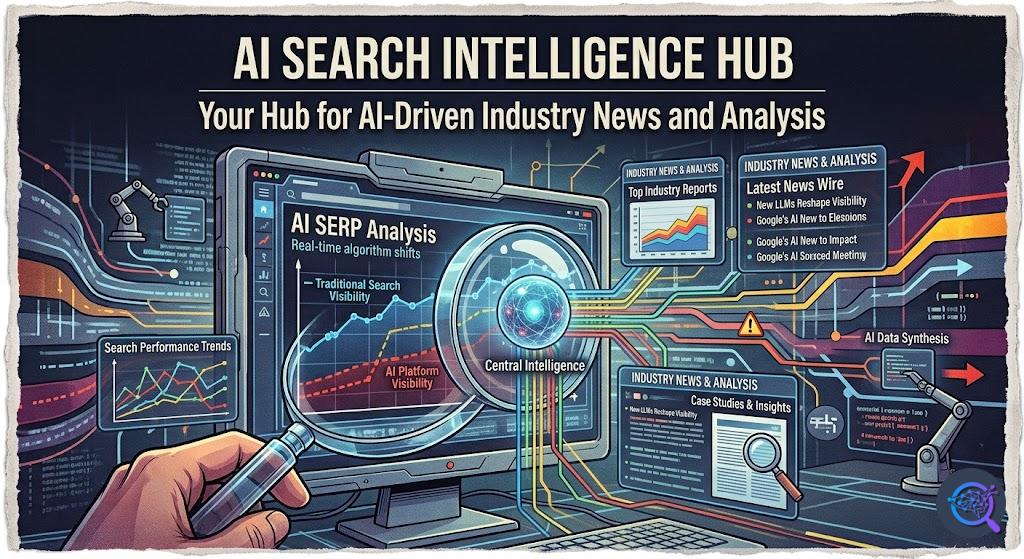
AI Search Intelligence
Why AI answer engines change faster than the news cycle covering them
The defining operational fact of AI search is that the engines are moving targets. Model updates ship without changelogs that describe citation behaviour, retrieval pipelines are revised quietly, and the answer a client’s customer sees today may be assembled differently next month even if nothing on the client’s site changed. This is why “AI search intelligence” is a discipline rather than a reading habit: the useful signal is not the announcement itself but the observable behavioural shift that follows it — which sources an engine starts favouring, how it handles freshness, whether it begins citing more or fewer sources per answer. Announcements tell you what a vendor intends; systematic query sampling across ChatGPT, Perplexity, Claude, and Gemini tells you what actually changed. Agencies that build their intelligence practice on observed citation behaviour, re-sampled on a fixed cadence, catch shifts weeks before they show up in industry commentary — and can explain to a client why their citation share moved rather than discovering it after the fact.
Reading model updates for citation impact, not feature headlines
When a major AI platform ships an update, the coverage focuses on capability — longer context, better reasoning, new modalities. Almost none of it addresses the question that matters for visibility work: did the update change how the engine selects and attributes sources? Those are different release notes, and usually unwritten ones. The practical method is to treat every significant model or product update as a hypothesis to test: re-run a fixed query set across the affected engine within days of the release, compare citation patterns against the prior baseline, and log what moved. Sometimes the answer is nothing — a reasoning improvement with no retrieval change. Sometimes an update quietly reshuffles source preferences, elevates or demotes certain content structures, or changes how recency is weighted. The agencies and in-house teams that maintain their own before-and-after baselines are the only ones who can answer the client question “did the new model hurt us?” with evidence instead of speculation.
The signal-versus-noise problem in GEO industry coverage
GEO and AEO are young enough that the commentary volume vastly exceeds the evidence base. A large share of what circulates as “AI search strategy” is extrapolated from single anecdotes, untested assumptions carried over from SEO, or vendor content optimised to sell a tool. The filter that separates signal from noise is reproducibility: does the claim describe an observable, repeatable citation behaviour that anyone can verify by running the queries themselves? Claims about what engines “prefer” that come with no query set, no engine breakdown, and no date are opinions, not intelligence. This is also why dated observations matter more in this field than almost any other — a genuinely accurate finding about citation behaviour from six months ago may already be obsolete. Treat every strategic claim as carrying an implicit expiry date, weight sources that show their method, and be most sceptical of the confident, evergreen-sounding advice — the engines do not sit still long enough for much advice to be evergreen.
How competitor citation movements telegraph strategy shifts
One of the most underused intelligence sources is the competitive set itself. When a competitor’s citation share rises across the engines on a defined query set, that movement is a public record of something working — new corroborating coverage, an entity clean-up, restructured content, or earned authority in a specific topic cluster. Because AI engines draw on the open web, the causes are usually discoverable: new third-party mentions, fresh structured data, a Wikidata presence that didn’t exist before, or a content series that started leading with extractable answers. Tracking competitor citation movement on the same cadence as the client’s own turns the four engines into a competitive intelligence layer, not just a visibility scoreboard. The pattern to watch for is concentration: a competitor gaining citations across one engine but not others often reflects an engine-specific behaviour worth understanding, while gains across all four almost always trace back to fundamentals — entity strength and corroboration — that are worth reverse-engineering.
Building an internal intelligence cadence instead of reacting to headlines
The teams that handle AI search change well are not the ones that read the most news — they are the ones with a standing cadence that converts change into a routine instead of an emergency. A workable cadence has three layers. Weekly: re-sample the core query set across the four engines and log citation deltas, so drift is caught early and trend lines stay unbroken. Monthly: review engine and platform announcements against the observed data, and update internal guidance only where the data corroborates the announcement. Quarterly: revisit the query set itself, because the questions buyers ask AI engines evolve as adoption matures, and a stale query set measures a market that no longer exists. The discipline point is that intelligence flows from the measurement layer, not from the coverage layer — headlines generate hypotheses, but the recurring audit generates the answers. Teams that invert this, reacting to every announcement without a baseline to compare against, end up perpetually busy and rarely better informed.
AI Search Intelligence
AI search does not stand still. Models update without warning, citation behaviour shifts between one audit and the next, and most of the commentary published about it is opinion wearing the costume of evidence. This category tracks what is actually changing across ChatGPT, Perplexity, Claude, and Gemini — observed citation behaviour, engine and platform developments that measurably affect visibility, and the analysis frameworks that separate a real shift from industry noise. The goal is intelligence you can act on: dated, engine-specific, and grounded in what the engines are observably doing rather than what press releases say they will do.
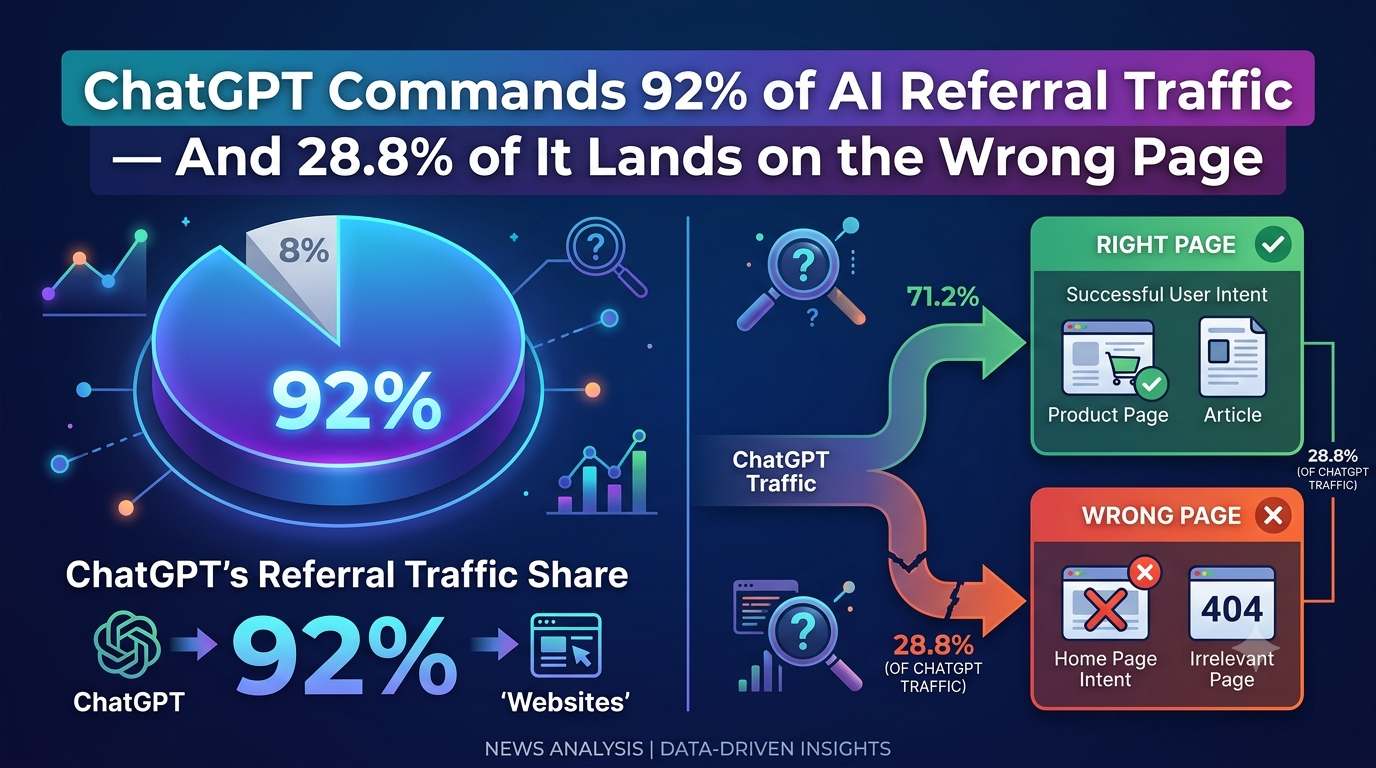
ChatGPT Commands 92% of AI Referral Traffic — And 28.8% of It Lands on the Wrong Page
Previsible released its third AI Traffic Study on 6 July 2026 via BusinessWire, analysing 6.77 million LLM-driven sessions across 166 websites spanning November 2024 through May 2026. The headline finding: ChatGPT commands 92.4% of all trackable standalone AI referral…
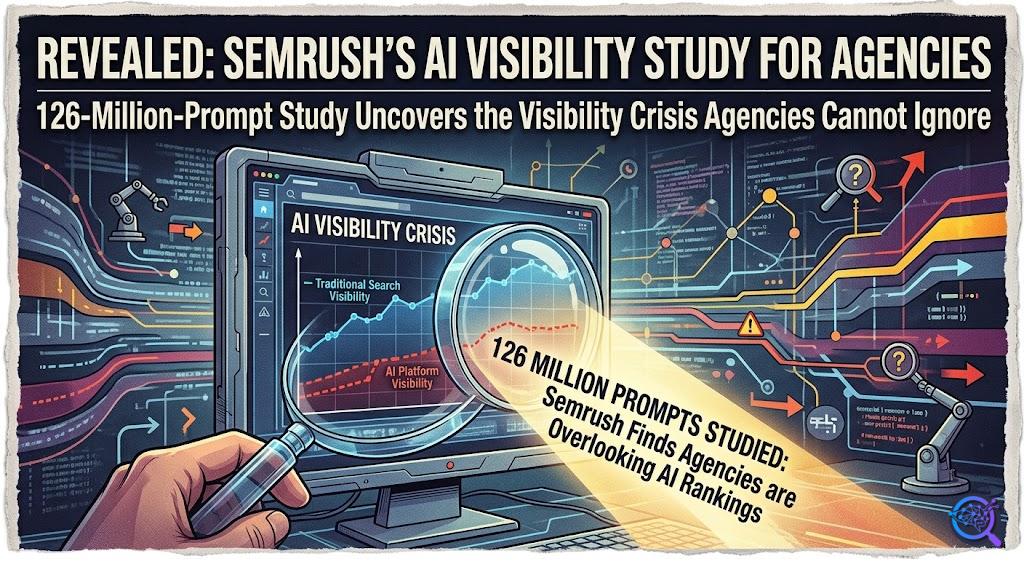
Semrush’s 126-Million-Prompt Study Reveals the AI Visibility Crisis Agencies Cannot Ignore
On 26 June 2026, Semrush — an Adobe company — published the 2026 AI Visibility Index, a flagship study built from 126 million U.S. AI search prompts collected between January and April 2026 across ChatGPT, Google Gemini, Google AI Mode, and Google AI Overviews. The…
The Munich Ruling Changes What AI Search Visibility Actually Means for Your Clients
Your client’s brand can now be defamed at scale by an AI answer engine — and the company running that engine may be legally responsible for it. That is the practical consequence of a landmark ruling handed down in Munich on 9 June 2026, and it reframes what…
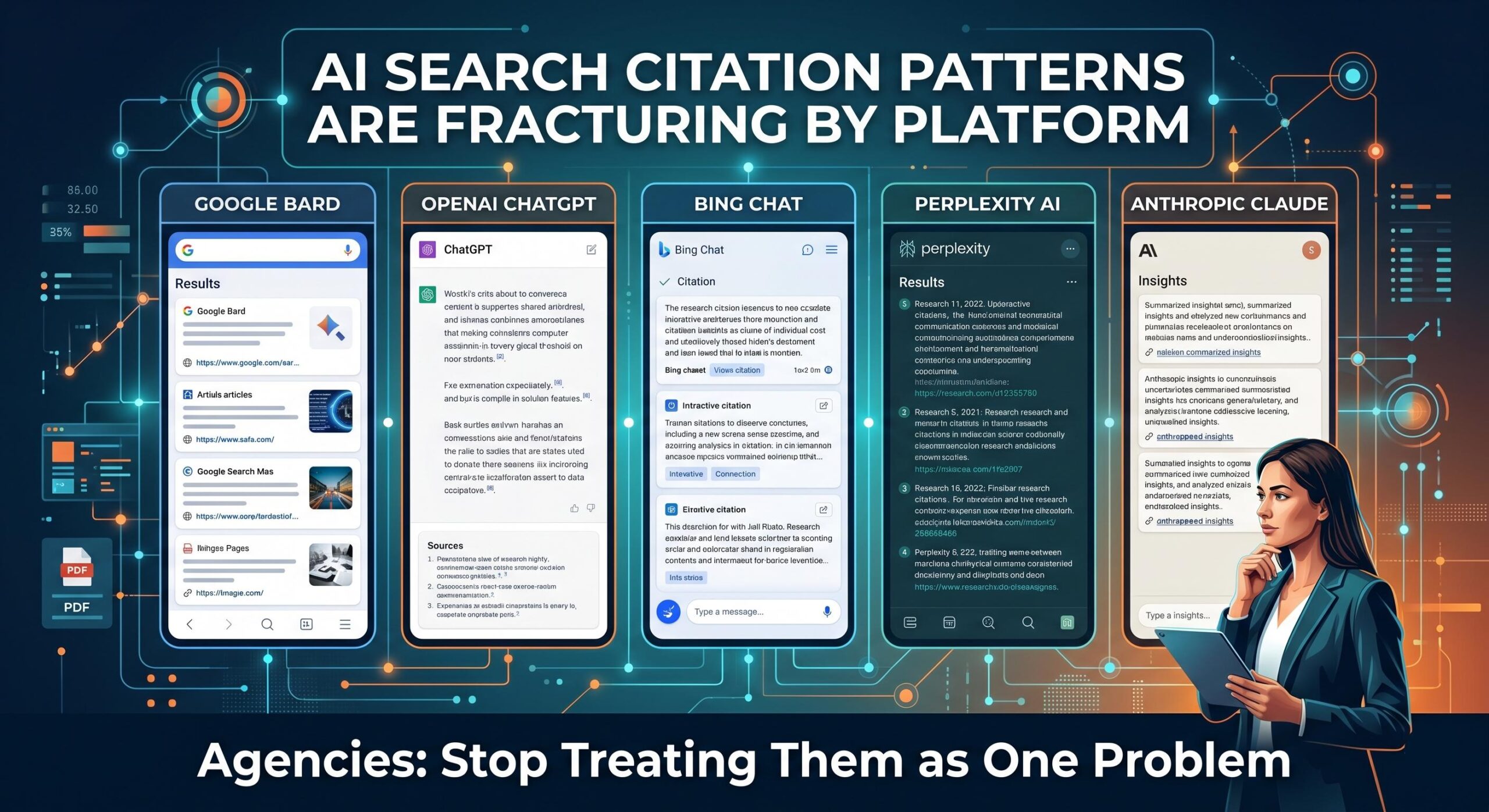
AI Search Citation Patterns Are Fracturing by Platform — and Agencies Need to Stop Treating Them as One Problem
AI search citation patterns are diverging sharply across platforms in 2026, and the agencies still treating generative engine optimisation as a single unified discipline are already falling behind. The data published across Q1 and Q2 this year makes one thing…
AEO and GEO Are Now Core Agency Practice — The Data Makes the Case
AEO and GEO are no longer fringe disciplines debated at conferences — they are now the operational centre of how serious agencies approach brand discovery in AI search. The numbers behind that shift are no longer soft or directional. They are concrete, and they are…
Frequently asked questions
Q: How often does AI citation behaviour actually change?
A: There is no fixed schedule — engines update models, retrieval pipelines, and source preferences on their own timelines and rarely document citation impact. In practice, meaningful shifts are observable every few weeks to months on a well-constructed query set, which is why recurring measurement matters more than following announcements. An announcement tells you a change happened; only re-sampling your queries tells you whether it affected you.
Q: Do model updates from OpenAI, Anthropic, Google, or Perplexity affect existing citations?
A: They can, and the effect is not predictable from the release notes. A capability-focused update may leave retrieval untouched, while a quiet pipeline revision can reshuffle source preferences without any headline at all. The reliable way to know is a before-and-after comparison on a fixed query set — teams that maintain their own baselines can attribute citation changes to specific updates; teams that don’t can only guess.
Q: How do I tell credible GEO analysis from speculation?
A: Look for reproducibility. Credible analysis states which engines were tested, which queries were run, when, and what was observed — so anyone can verify it. Claims about what AI engines “prefer” that arrive without a method, an engine breakdown, or a date are opinion. Also check the date on everything: an accurate finding about citation behaviour ages quickly, and undated evergreen-sounding advice is the least trustworthy category in this field.
Q: Should agencies react to every AI search announcement?
A: No — react to observed behavioural change, not announcements. The workable pattern is to treat announcements as hypotheses: log them, re-sample your query set across the affected engine, and update your guidance only where the data confirms an actual shift. Teams that react to every headline without a measurement baseline generate constant churn for clients without producing better visibility.
Q: Can I track AI search changes with traditional SEO monitoring tools?
A: No. Rank trackers, Search Console, and legacy SEO platforms cannot see AI citation behaviour at all — they measure a different channel. Detecting change in AI search requires systematically querying the four engines on a recurring cadence and comparing citation patterns over time, either manually (which does not scale) or through a platform purpose-built for cross-engine citation tracking.